
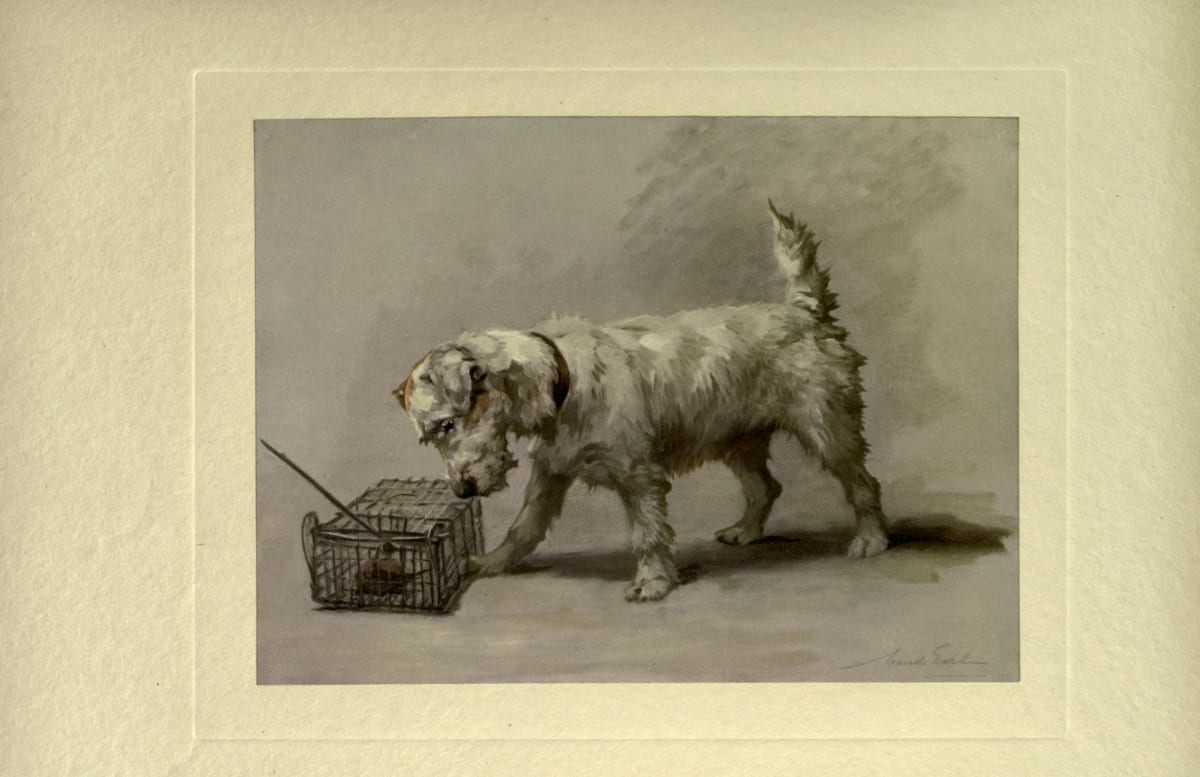
Maud Earl painted dogs the way other portraitists painted statesmen: as individuals first, types second. That single instinct — pursued for nearly six decades, across two countries, and through the kennels of two reigning monarchs — is what separates her from almost every animal painter who came before her, and most who came after. Edwin Landseer gave dogs moral seriousness. George Stubbs gave them anatomical truth. Maud Earl gave them interior lives. The difference matters, and it's the reason her work still moves modern dog owners who have never heard her name.
She was also the first woman to make a serious career of it. The Royal Academy hung her work in 1884, when she was twenty. She painted Queen Victoria's collie, Edward VII's wire fox terrier Caesar, and the champion show dogs of half the major British kennels. When the Britain she knew dissolved into the First World War, she sailed for New York and built a second career there. She died in Manhattan in 1943, a working painter to the end. If you've ever seen a dog rendered with the specific look of thinking something — that's the tradition Maud Earl built.
Who Was Maud Earl?
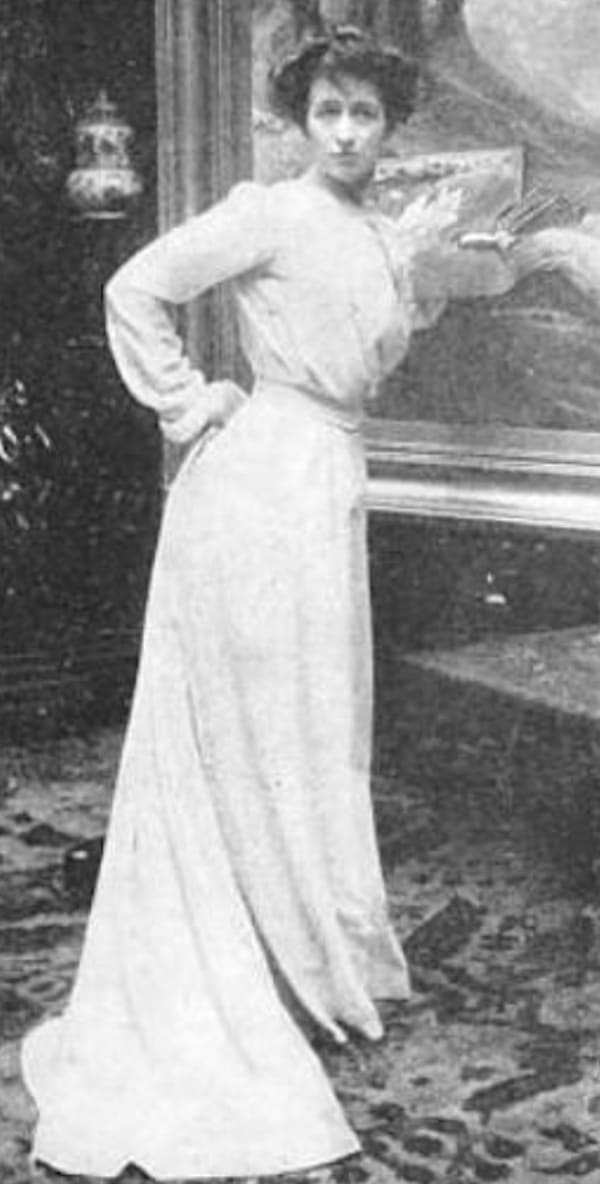
Alice Maud Earl was born in Marylebone, London, in 1864, into a family that already painted animals for a living. Her father, George Earl, was a respected sporting painter; her uncle Thomas Earl and half-brother Percy Earl worked in the same field. George was her first teacher and a strict one. He made her draw from skeletons — dog, horse, and human — before he let her paint anything alive. The discipline showed for the rest of her career.
She studied formally at the Royal Female School of Art, then exhibited her first canvas at the Royal Academy in 1884: a stag. Her first dog painting hung there in 1886. She would continue to exhibit at the Academy until 1923 — a span of thirty-nine years, which is itself a kind of statement.
Royal patronage came early. Queen Victoria commissioned her to paint a favorite collie. Edward VII, then Prince of Wales, became a steadier client, and after his accession in 1901, Earl was effectively his preferred dog painter. She rendered his Irish terrier Jack and, most famously, his wire fox terrier Caesar — the small dog who walked behind his coffin in the 1911 funeral procession and was photographed by every newspaper in Europe.
In 1916, with the war turning the England of her childhood into something unrecognizable, Earl moved to New York. She painted the dogs of American breeders and fanciers for the next twenty-seven years. She is buried at Sleepy Hollow Cemetery.
What Made the Maud Earl Style Different
The shorthand: character first, breed-correctness second.
Earl's training under her father gave her anatomical precision equal to Landseer's. She could draw a setter's shoulder, a terrier's stop, a collie's coat with the kind of accuracy that breed clubs trusted for their championship records. But she refused to let that accuracy become the whole picture. Where lesser animal painters of her generation produced what amounted to standing breed plates — the dog as type specimen, side-on, against neutral ground — Earl angled her subjects, lit them from above, and concentrated her best work around the eyes.
Her dogs always look like they are about to do something, or have just stopped doing it. The terrier glances up from a scent. The collie has heard a door close in another room. The spaniel waits, with that specific spaniel patience, for an instruction it knows is coming.
Her brushwork was tighter than Landseer's — less drama in the fur passages, more attention to the precise architecture of the muzzle and the wet shine of the nose. Compositions were more natural than Stubbs's studio formality and warmer than the breed-plate work of her contemporaries. Backgrounds tended toward soft interiors or muted landscapes, never competing with the subject.
She was strongest with terriers, spaniels, and collies — the working breeds of the British countryside she grew up watching her father paint. Her great gift was psychological specificity: a Maud Earl dog is recognizably that dog, not that breed.
Her Famous Dog Paintings
Silent Sorrow (1910). Painted shortly after the death of Edward VII, Silent Sorrow shows the king's wire fox terrier Caesar resting his chin on the empty armchair of his master. It is one of the most reproduced dog paintings of the twentieth century — printed in the 1912 book Where's Master?, hung for years outside the American Kennel Club president's office, and still in the AKC collection today. It is also a fair summary of Earl's whole project: a small dog, a piece of furniture, and the unmistakable interior weight of grief.
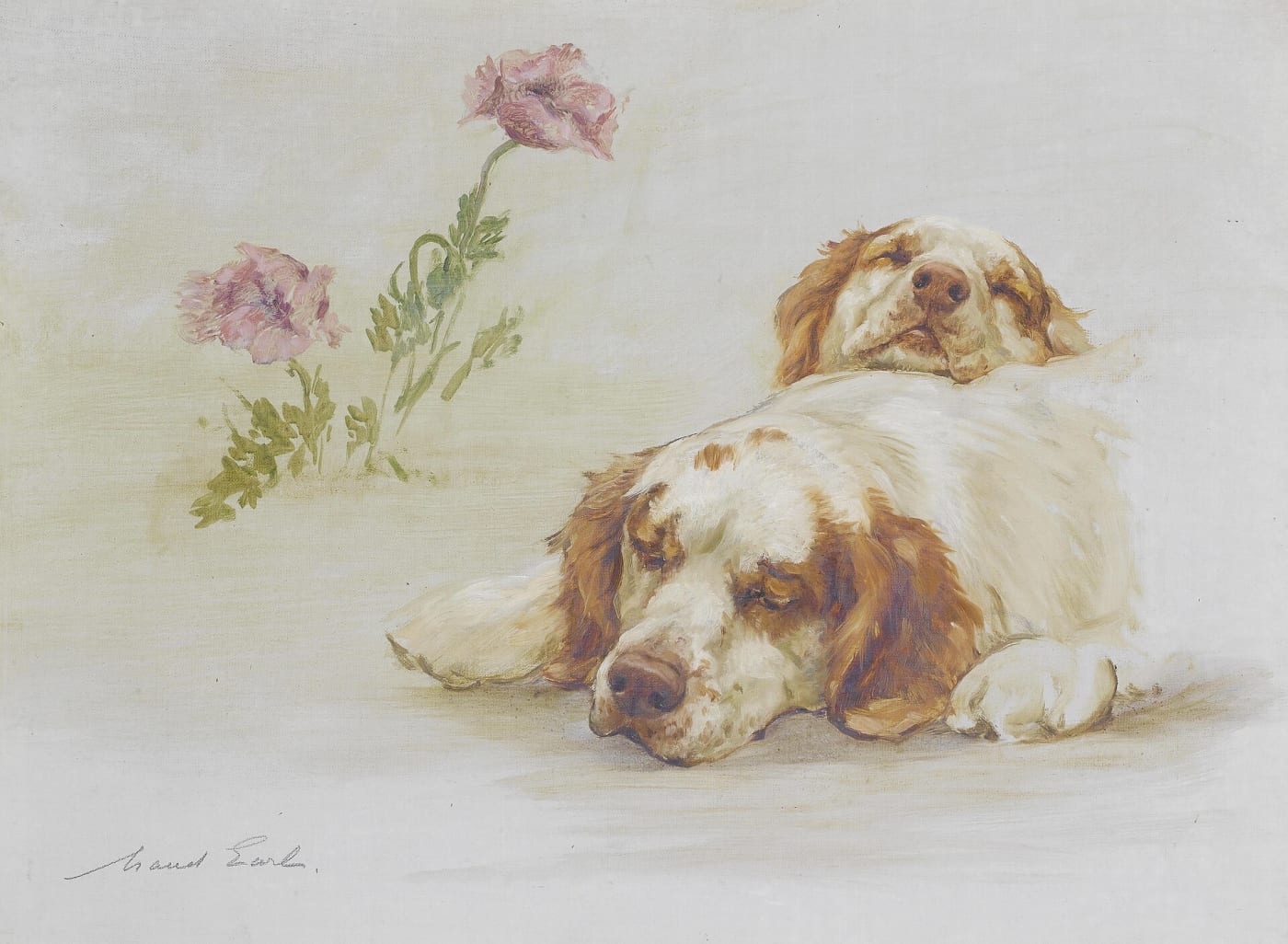
Caesar of Notts, portraits. Earl painted Edward VII's Caesar more than once. The dog became a national figure after walking behind the king's coffin, ahead of nine European monarchs and the Kaiser, in May 1911. Earl's portraits are how most of Britain knew his face.
Jack, King Edward VII's Irish Terrier. Held in the Royal Collection. A working portrait — alert, mid-thought, the kind of likeness an owner recognizes before any breed expert does.
The Power of the Dog (1910–11). A folio of plates illustrating breed champions, published by Hodder & Stoughton in London. The hero image above is Plate VIII from this series — Sealyham Terrier "Peer Gynt," owned by Mr. Harry Jones. These were nominally commercial commissions for the Kennel Club registries, marketing pieces for breed records and stud advertising. She could have phoned them in. She did not. Even the working commercial pieces show the same eye for individual character.
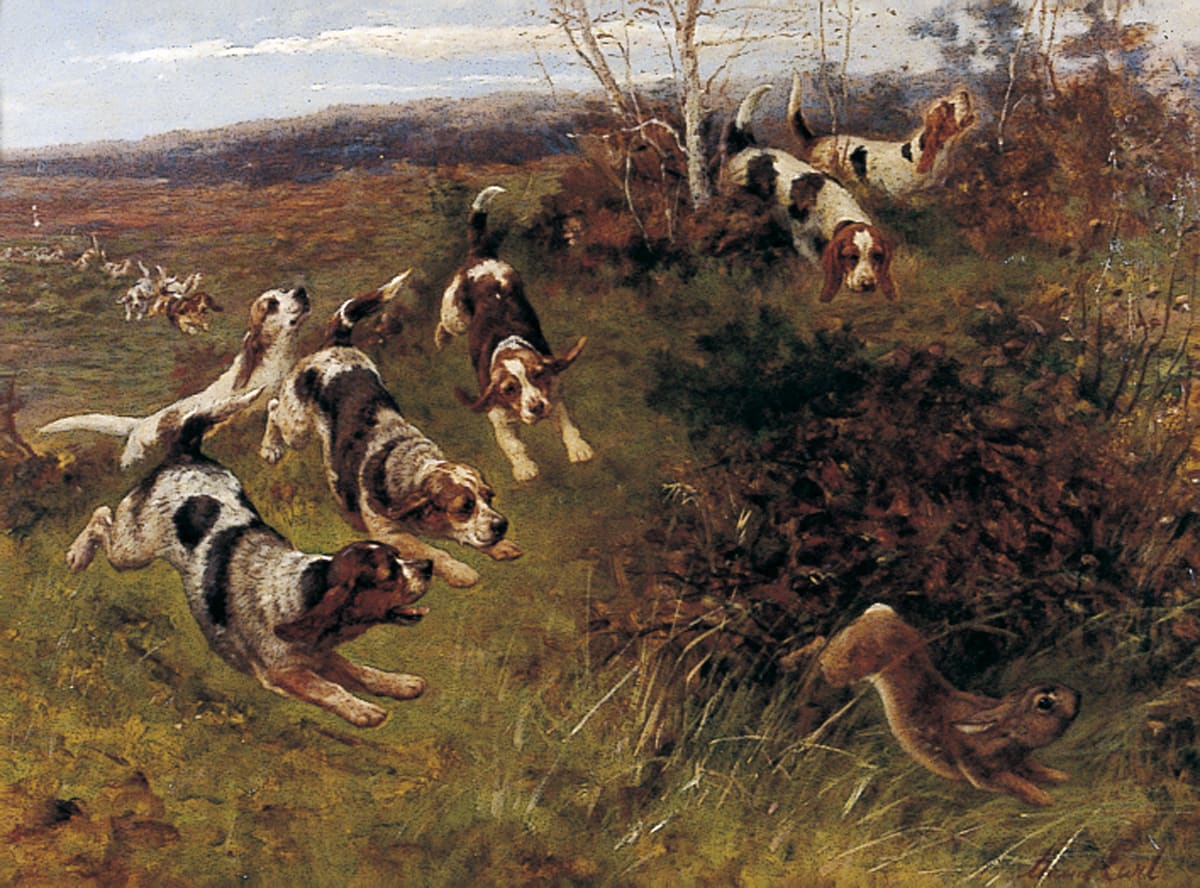
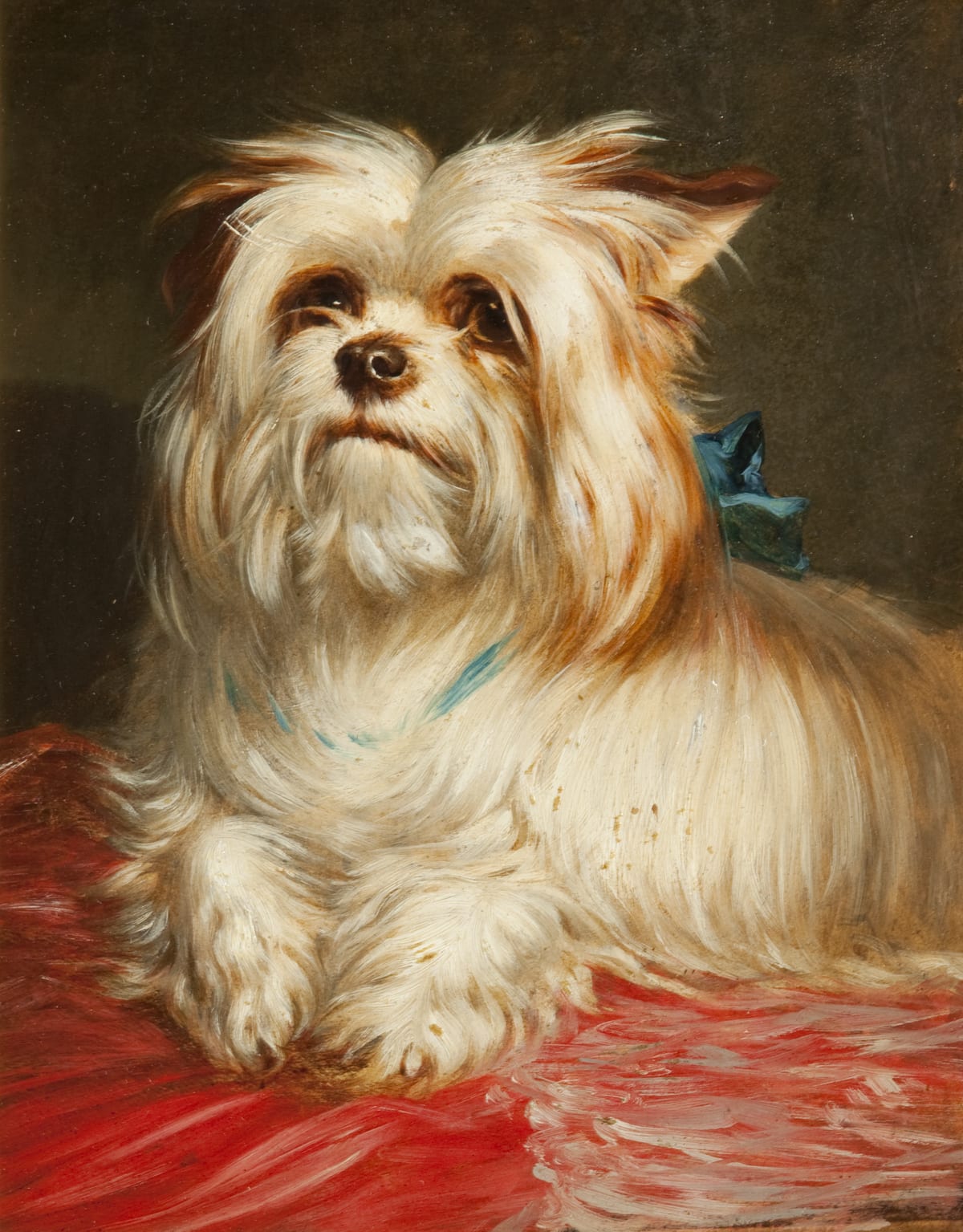
Rum Bess, Gordon Setter; A Yorkshire Terrier; Sussex Pocket Beagles. Three more representative single-subject and group works. The Gordon Setter and the Yorkshire Terrier both show the close-range psychological work she's best known for; the Sussex Pocket Beagles is one of her group compositions, where the trick of "every dog as an individual" gets harder and Earl still manages it.
The First Major Woman in Animal Painting
It is worth saying plainly. In 1884, when Maud Earl first hung at the Royal Academy, women in British painting were a small minority and women in animal painting were almost unheard of. The field was considered a sporting genre — the province of men who hunted, raced, and bred. Earl entered it at twenty, trained by her sporting-painter father, and within a decade had eclipsed him in fame.
She did not make a public point of her gender. She made the point through a forty-year working career, royal patronage on two reigns, and a second act in New York that lasted into her seventies. The contemporary press began calling her "the queen of canine portraitists." The American Kennel Club Museum of the Dog still calls her that. It is not flattery; it is accurate.
Honoring her work means honoring the fact that the modern tradition of psychologically serious dog portraiture has a woman at its source.
The Maud Earl Tradition Today
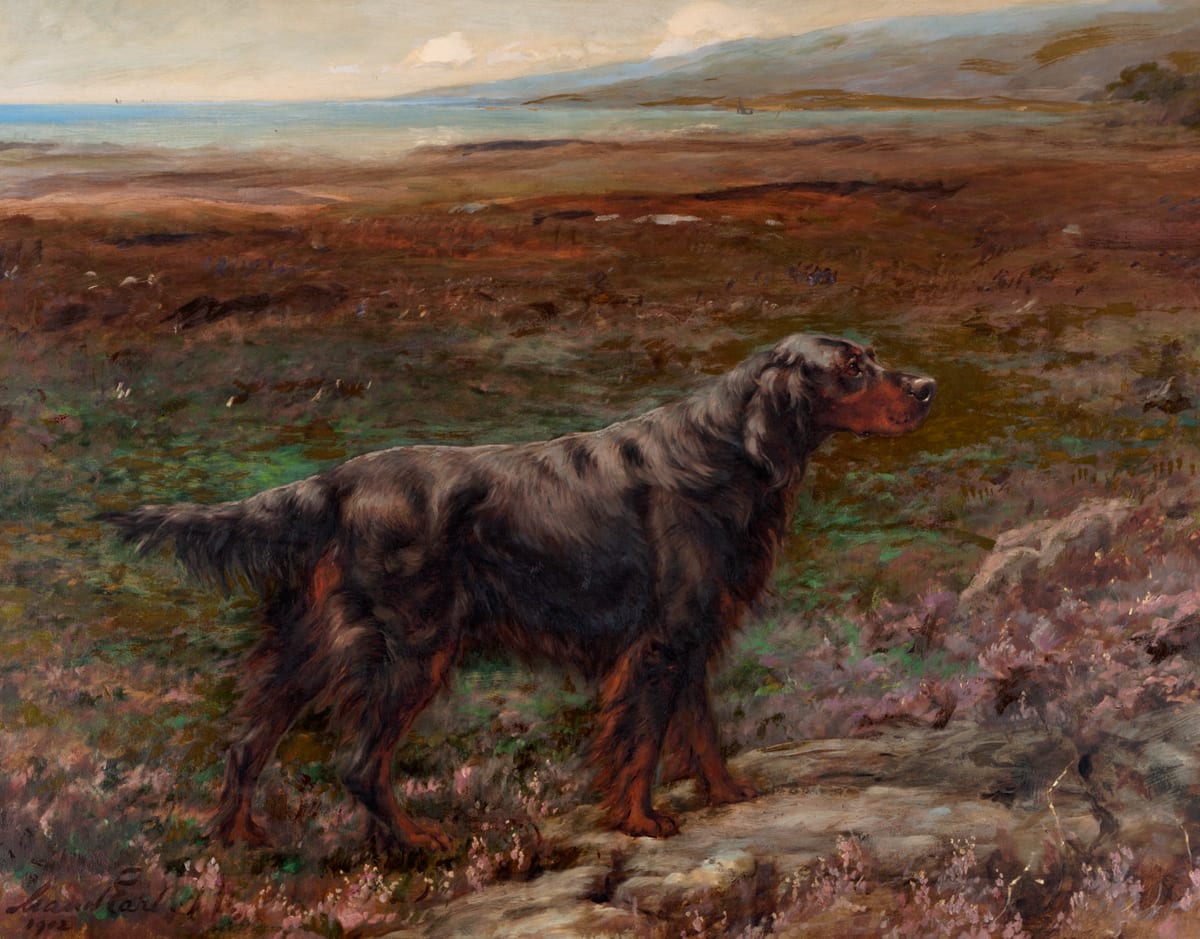
What Maud Earl gives a modern viewer is permission. Permission to want your dog rendered as your dog — not as a breed example, not as a generic animal portrait, not as decor. Her best work argues that the specific tilt of one collie's head, or the particular way one terrier holds a paw up at the end of an alert, is worth a serious painter's serious attention.
That argument has aged well. The dog-owning audience of vintagedogoilpainting.com is exactly the audience Earl was painting for: people who see their dog as a particular soul, not as a category. The Old Masters tradition Earl worked in — warm palette, soft interior light, character in the eyes — is the visual language those owners reach for, often without knowing whose hand shaped it.
Pet Pic Portraits carries that tradition forward with contemporary tools: the work is AI-rendered in the vintage style and personally reviewed by Mercy before it ships. The aim is the same as Earl's. Render this dog. Not a dog like this dog. This one.


